
If you are in your seventies and experiencing abdominal pain or a noticeable bulge, you might be wondering: is 75 too old for hernia surgery?
The short answer is no: 75 is not too old for hernia surgery because chronological age alone should not prevent you from receiving necessary surgical care. Dr. Robert Jean and Dr. Darren Hunt of the University Surgical Associates Hernia Center often address this concern, emphasizing that a patient’s overall health, tissue quality, and comorbidities are far more important than their birth year when determining surgical candidacy.
The Reality of Hernia Surgery at Age 75 and Beyond
As we age, our abdominal muscles and connective tissues naturally weaken, making hernias increasingly common among senior citizens. In fact, the incidence of inguinal hernias peaks significantly in older adults, particularly between the ages of 75 and 80. The likelihood of requiring a surgical repair is so high that up to 25% of men will develop an inguinal hernia by the time they reach 80 years old.
Rather than ruling out surgery based on age, modern medicine focuses on personalized risk assessment. A 75-year-old in good cardiovascular health may be an excellent candidate for a minimally invasive hernia repair, experiencing massive improvements in their daily quality of life.
Understanding Hernias in the Elderly
Dr. Hunt explains that a hernia is essentially a defect in the abdominal wall. While most people don’t think of their abdominal wall as a key piece of anatomy until it causes a problem, it is a dynamic structure that sometimes requires surgical repair to function properly.
Hernias do not discriminate, though they do heavily favor males. Research indicates that the lifetime risk of developing an inguinal hernia is 27% for men, compared to just 3% for women. Meanwhile, other types of hernias, such as hiatal hernias (where the stomach bulges through the diaphragm), affect approximately 70% of individuals over 70.
| Hernia Type | Common Characteristics in Older Adults |
|---|---|
| Inguinal | Occurs in the inner groin; highly prevalent in men over 70 due to weakened abdominal walls and strain. |
| Hiatal | Occurs in the upper stomach; extremely common in seniors and often associated with chronic acid reflux. |
| Umbilical | Occurs near the belly button; risk increases with age, obesity, and previous abdominal surgeries. |
What Are the Risks of Hernia Surgery in the Elderly?
Elective vs. Emergency Surgery
A common misconception among older adults is that ignoring a hernia is safer than undergoing surgery. However, untreated hernias are progressive, growing larger and becoming increasingly difficult to repair over time.
Choosing to have elective surgery is vastly safer than waiting for an emergency. Studies show that elective groin hernia repair in the elderly has a very low mortality rate of approximately 0.1%. Conversely, if a hernia becomes incarcerated or strangulated and requires emergency surgery, the complication rate for elderly patients skyrockets to between 21.2% and 28.9%. In these emergency scenarios, the mortality rate also increases significantly, ranging from 1.2% to 6%.
While “watchful waiting” is sometimes proposed for older patients with asymptomatic hernias, clinical data reveal that up to 70% of elderly patients who choose this route will ultimately require surgery within five years due to worsening symptoms or dangerous complications.
Evaluating the 75-Year-Old Patient
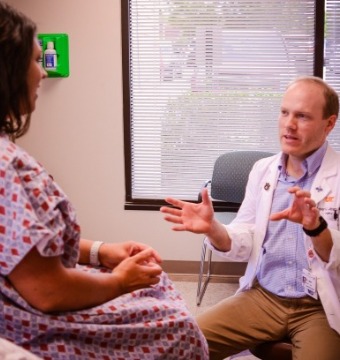
If you suspect you have a hernia, the first step is a professional evaluation. According to Dr. Jean, diagnosing a hernia usually doesn’t require fancy testing, extensive lab work, or X-rays. Most of the time, doctors can diagnose hernias through a basic physical exam in the office. For a 75-year-old patient, the evaluation process typically follows these steps:
- Initial Consultation: A physical exam is conducted to confirm the presence of a hernia without the immediate need for complex imaging.
- Surgical Planning: When surgery is deemed necessary, the surgeon may order in-depth imaging to tailor the repair to the patient’s unique anatomy.
- Multidisciplinary Coordination: If the patient has a complicated abdominal wall or comorbidities, disciplines like dietary planning, plastic surgery, and pain management are engaged to optimize surgical success.
“Sometimes patients are ideal candidates for hernia repairs, or sometimes they have a very complicated abdominal wall, and so we have to engage other disciplines… we have those resources at USA Hernia Center.”
– Dr. Robert Jean
The Role of Surgical Mesh in Older Adults
Surgical mesh is a standard treatment for hernia repair, acting as a scaffold made of interwoven, suture-like material that reinforces the weakened tissue. Dr. Hunt notes that while anyone is technically a candidate for mesh, it is tailored carefully to the individual patient, their hernia type, and their existing health conditions.
Patients often ask if mesh is safe to leave in the body. The doctors emphasize that while mesh is generally safe and highly effective, it is a medical implant. Surgeons must weigh the pros and cons of mesh with every senior patient to ensure the safest possible outcome:
- Pros: Mesh significantly reduces the risk of hernia recurrence and provides a durable, long-lasting repair by allowing the body’s natural scar tissue to form a strong barrier.
- Cons: Much like a knee or shoulder replacement, mesh is a foreign implant that carries a rare but serious risk of infection that must be monitored closely.
Conclusion
So, is 75 too old for hernia surgery? Absolutely not. While advanced age introduces unique considerations regarding anesthesia and recovery, chronological age alone is not a barrier to treatment. With proper preoperative evaluation, elective scheduling, and a tailored surgical approach, seniors can safely undergo hernia repair and return to a comfortable, active lifestyle.





















Leave A Comment