
If you have ever felt sudden, sharp pain or a pulling sensation in your lower abdomen while moving furniture or battling a severe cold, you might be wondering about the cause. Pain when you cough or lift heavy boxes is often the first warning sign of a hernia, as these activities increase abdominal pressure and can aggravate the affected area.
In a recent interview, Dr. Robert Jean and Dr. Darren Hunt from the University Surgical Associates Hernia Center shared their expertise on this common condition. Let’s explore why this happens and what you can do about it.
The Mechanics of Abdominal Pressure and Pain
To understand why it hurts when you cough or lift heavy boxes, you have to look at how your body handles internal stress. Intra-abdominal pressure is the force created inside your abdominal cavity during physical exertion. Activities such as coughing, lifting heavy objects, and bending over cause a sudden and significant increase in intra-abdominal pressure.
“Most people don’t think of their abdominal wall as really a key piece to their anatomy until it causes a problem… it is a dynamic structure that does need fixation sometimes.” – Dr. Robert Jean
When there is weakness or a hole in this dynamic structure, the increased pressure has nowhere to go. A hernia occurs when an internal organ or fatty tissue pushes through a weakened area or defect in the surrounding muscle or connective tissue. When you cough or lift, the internal pressure forcefully pushes tissue through this gap, stretching the surrounding nerves and causing immediate discomfort. Patients frequently describe hernia pain as a dull ache, pulling, or burning sensation that intensifies during these high-pressure activities, which could explain why it hurts when you lift heavy boxes or other materials.
Common Symptoms of a Hernia
While pain during exertion is a primary indicator, hernias can present with a variety of symptoms. You may experience:
- A visible bulge: Often noticeable when standing or straining, but disappears when lying down.
- Heaviness or pressure: A dragging sensation in the groin or abdomen.
- Pain during daily activities: Discomfort that specifically flares up when laughing, coughing, or exercising.
How is a Hernia Diagnosed?
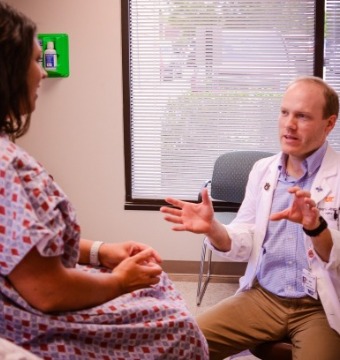
Most hernias can be diagnosed by a healthcare provider through a standard physical examination, without the need for advanced imaging. If you suspect that your pain is caused by a hernia, the next step is a professional evaluation. Dr. Hunt notes that patients often worry they will need extensive, fancy testing, but that is rarely the case.
During a physical exam for a suspected hernia, doctors routinely ask patients to stand and cough, which increases abdominal pressure and makes the hernia bulge more prominently and easier to feel. In some cases, a surgeon may order in-depth imaging to properly tailor the surgical repair to the patient’s specific anatomy.
Hernia Treatment Options and the Role of Surgical Mesh
Hernias do not heal on their own, and surgical intervention is typically required to close the defect. Hernia repair is one of the most common medical procedures, with surgeons performing more than one million hernia repair operations annually in the United States.
During surgery, doctors often use a medical device known as surgical mesh. Surgical mesh is commonly used in hernia repair to act as a scaffold that reinforces the weakened abdominal wall and reduces the risk of the hernia returning. Dr. Hunt explains that this interwoven, suture-like material allows the body to form scar tissue around it, creating a strong, permanent fix.
While mesh is considered safe and effective, it is an implant. Dr. Jean compares it to joint replacements: like knee or shoulder implants, it carries a slight risk of infection. Fortunately, these complications are relatively rare. The overall infection rate for surgical mesh used in hernia repairs is generally estimated to be between 1% and 8%.
| Hernia Repair Facts | Data |
|---|---|
| Annual US Surgeries | Over 1 Million |
| Mesh Infection Rate | 1% to 8% |
What Should I Do if It Hurts When I Cough?
If you are experiencing pain when you cough or lift heavy boxes, do not ignore it. Follow these steps:
- Stop straining: Avoid heavy lifting or strenuous workouts that exacerbate the pain.
- Seek an evaluation: Schedule an appointment with a hernia specialist or general surgeon.
- Discuss your options: Talk to your doctor about your lifestyle, comorbidities, and whether a mesh repair is right for you.
With the right medical expertise, you can repair the defect in your abdominal wall and return to your daily activities pain-free.







Leave A Comment